[Logistics 101] #1 - Optimal Zipline Setup
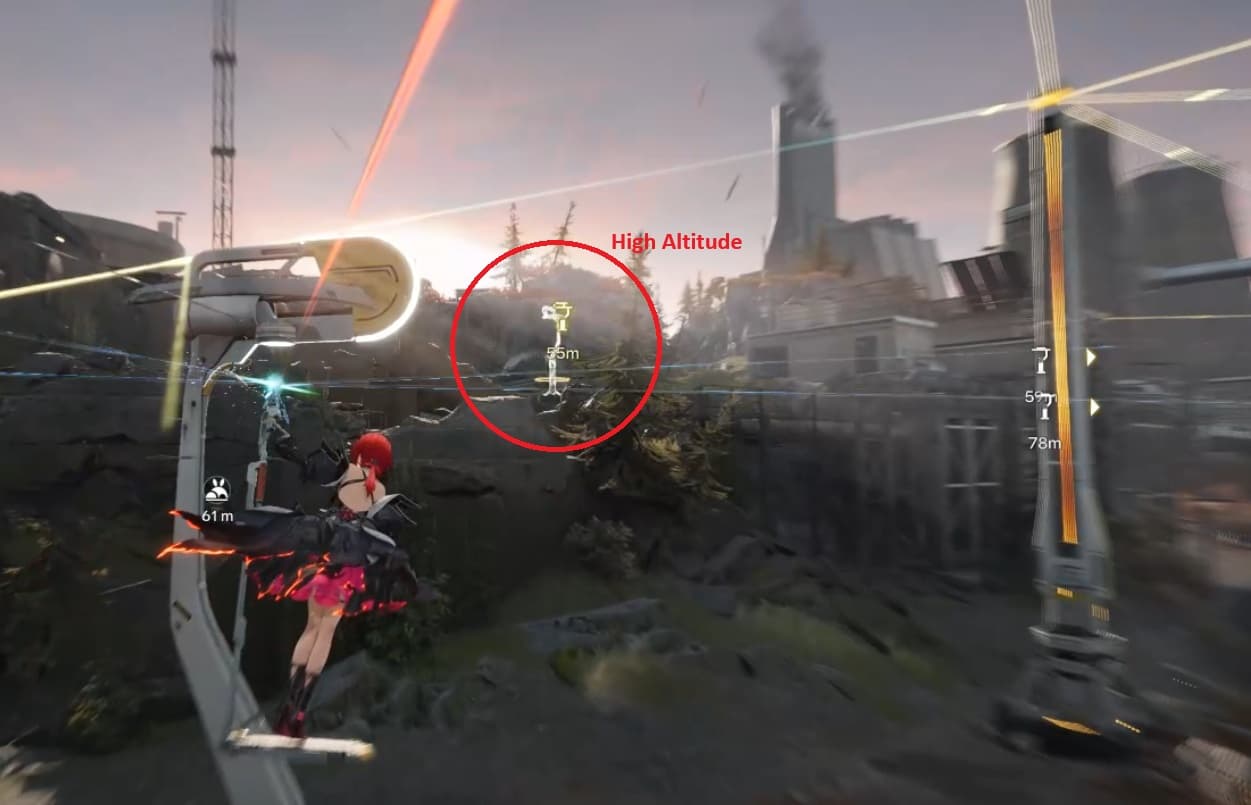
Wuling protocol capacity limits make ziplines a bottleneck — revisit optimal zipline placement.
Zipline Setup — 11 Principles
- Never use short-range ziplines. Replace any existing short-range with long-range (demolish and rebuild).
- Space long-range ziplines at maximum 110m when possible.
- Corners and terrain may force shorter spans — optimize per situation.
- Protocol teleport outshines hard-built zipline lines — check if you teleport more than zipline.
- World ziplines inspire routes but need maintenance — replace key points with your own.
- Ziplines need adjacent power poles. Excess poles eat protocol capacity in Wuling — small poles beside ziplines work well.
- Claim high ground. Borrow creative high-ground ziplines from friends for vision and low-ground route control.
- Zipline connectors are tall — link over low walls for creative jumps.
- Build zipline lines like subway lines in high-traffic areas: daily delivery first, 4-day mushroom/mineral second.
- Lines need station stops with minimal walking after dismount.
- New ziplines should connect to current and future lines without obstacle dead-ends.
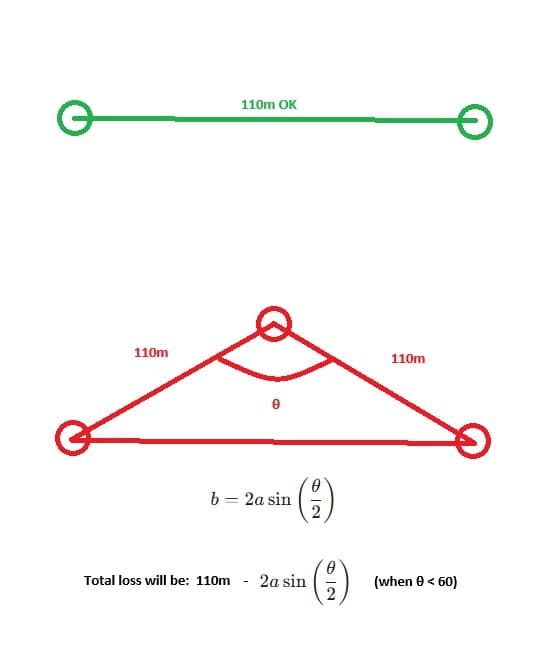
Formula Explanation
At maximum 110m between two ziplines, distance loss is 0.
With 3+ ziplines, hand error and corners create folding distance loss.
At θ = 180°, distance loss is 0 (ideal).
At θ = 60°, the shape is equilateral — remove the middle node and the line still connects.
As θ approaches 0°, loss grows and middle nodes lose value.
Real terrain folding is expected — understanding the principle is enough for practice.